

How do salons use professional beauty products pakistan?
Ibomma News Pro >> Health & Fitness>> How do salons use professional beauty products pakistan?How do salons use professional beauty products pakistan?
Salons play an important role in helping people maintain healthy hair, glowing skin, and a well-groomed appearance. Professional beauty products allow salon experts to provide treatments that meet different beauty needs. From hair coloring and deep conditioning to facials and manicures, these products help improve the quality of salon services. However, achieving good results requires more than purchasing expensive brands. Salon professionals must understand ingredients, application techniques, hygiene standards, and individual client needs.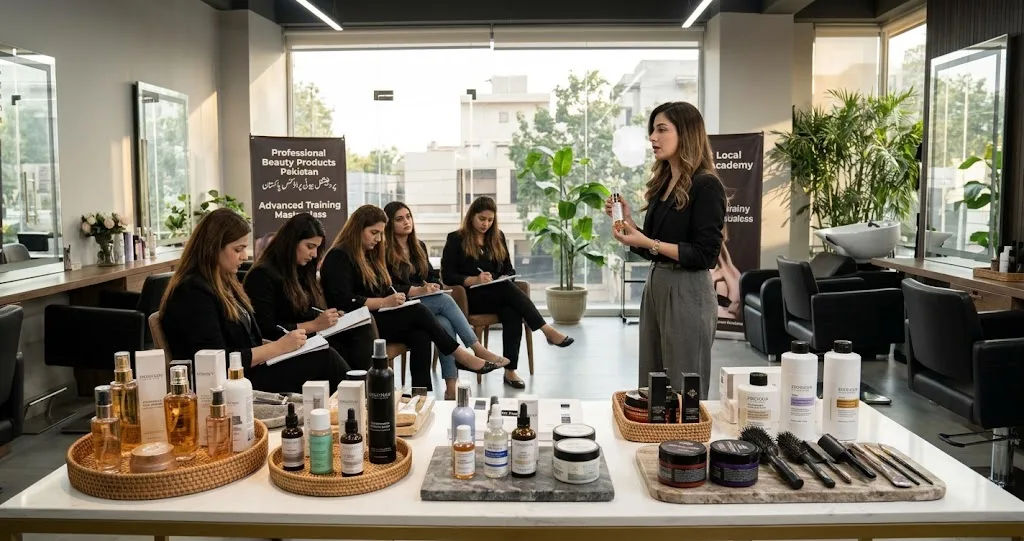
In Pakistan, the beauty industry continues to develop as customers become more interested in professional treatments and personalized care. Many salons now offer services that require specialized formulas, suitable equipment, and trained staff. Choosing professional beauty products pakistan helps salon owners explore products designed for professional use while considering local customer preferences, environmental conditions, and business budgets. When these products are selected and applied correctly, salons can deliver consistent services and build lasting relationships with their clients.
Understanding how salons use professional beauty products can help salon owners improve their services, beauty professionals develop their skills, and customers make informed decisions. From selecting suitable formulas to maintaining product safety, every step contributes to a better salon experience.
Professional Beauty Products Used in Salons
Professional beauty products are formulations designed to support specialized beauty treatments. They may include shampoos, conditioners, hair dyes, styling products, facial cleansers, exfoliants, masks, moisturizers, nail treatments, and professional makeup.
Unlike products intended only for simple home routines, some professional formulas require specific application methods or training. For example, chemical hair treatments and certain skin procedures must be performed by trained professionals who understand the ingredients and associated risks.
Salons select products according to the services they offer, their clients' requirements, and the results they want to achieve.
Hair Care Products
Hair care products are among the most frequently used items in salons. They include cleansing shampoos, moisturizing conditioners, hair masks, scalp treatments, serums, and heat-protection sprays.
Professionals choose these products after examining the client's hair texture, scalp condition, and previous treatments. Dry hair may benefit from conditioning products, while oily scalps may require a suitable cleansing routine.
Color-treated hair often needs products designed to help maintain its appearance and reduce dryness. Stylists also use heat protectants before blow-drying, straightening, or curling hair.
Skin Care Products
Skin care products help salons provide facials and other appropriate cosmetic services. Common examples include cleansers, toners, exfoliating products, masks, moisturizers, and sunscreen.
Professionals consider whether a client has dry, oily, combination, sensitive, or acne-prone skin before selecting products. A formula that works well for one person may irritate another.
Salons should avoid promising that cosmetic products will cure skin diseases. Clients experiencing persistent acne, unexplained rashes, or severe irritation should be referred to a qualified healthcare professional.
Makeup and Nail Products
Makeup artists use foundations, concealers, powders, eye products, lip colors, and setting sprays to create different looks. Product selection depends on skin tone, skin type, occasion, and desired coverage.
Nail technicians use nail cleansers, polishes, cuticle products, and suitable moisturizing treatments. When providing artificial nail services, professionals must also follow the product manufacturer's instructions and ventilation recommendations.
Each category requires appropriate storage, clean application tools, and careful attention to hygiene.
How Salons Choose the Right Products
Selecting products is one of the most important responsibilities of a salon owner. The right choices can improve service quality, reduce waste, and support customer satisfaction.
Understanding Client Needs
Salons usually begin by identifying the services their customers request most often. A salon specializing in hair coloring may need a wider selection of color formulas, developers, color-safe shampoos, and conditioning treatments.
A salon focused on facials may prioritize cleansers, moisturizers, masks, and products suitable for different skin types.
Client consultations help professionals understand allergies, sensitivities, previous treatments, and personal preferences. This information supports safer and more appropriate product selection.
Checking Ingredients and Product Quality
Professional products should be evaluated according to their ingredients, intended purpose, quality, and suitability for the treatment.
For instance, a moisturizing conditioner may contain ingredients that help soften hair and reduce friction. A facial cleanser may contain surfactants that remove oil and dirt without unnecessary harshness.
Salon professionals should read ingredient lists and follow usage instructions. They should also pay attention to warnings, expiration dates, and any recommended precautions.
A higher price does not automatically mean a product is better. The most appropriate choice is one that performs reliably, suits the client's needs, and meets relevant safety standards.
Purchasing From Reliable Suppliers
Counterfeit and improperly stored beauty products can create serious problems for salons. They may have incorrect ingredient information, inconsistent performance, or compromised quality.
Salon owners should purchase from reputable distributors, authorized retailers, or established suppliers that can provide genuine products and appropriate documentation.
When purchasing professional beauty products pakistan, businesses should compare supplier reliability, packaging quality, ingredient information, and product authenticity rather than making decisions based on price alone.
Reliable purchasing also makes it easier to maintain consistent stock and replace products when needed.
How Salons Use Professional Products for Hair Treatments
Hair services often require several products used in a particular order. Professional knowledge helps stylists select suitable formulas and apply them correctly.
Hair Washing and Conditioning
A salon hair service often begins with shampooing. The stylist chooses a cleanser based on the client's scalp and hair needs.
The shampoo is applied according to its directions, distributed through the hair, and rinsed thoroughly. Conditioner is then applied where appropriate, usually focusing on the lengths and ends when the scalp does not require conditioning.
For clients with dry or damaged-looking hair, stylists may recommend a suitable mask or leave-in conditioner. These products can improve softness, manageability, and appearance.
The professional should avoid assuming that every client needs the same treatment. Fine hair, thick hair, chemically treated hair, and naturally curly hair can respond differently to particular formulas.
Hair Coloring and Chemical Treatments
Hair coloring requires careful product selection and precise application. Stylists consider the existing hair color, desired result, hair condition, and previous chemical treatments before choosing a formula.
Manufacturers provide instructions concerning mixing ratios, application methods, processing times, and precautions. Professionals should follow those directions rather than improvising.
Required allergy-alert tests and strand tests should be performed according to the product instructions and applicable professional guidance. A previous successful treatment does not guarantee that a client will never develop an allergic reaction.
Chemical straightening, relaxing, and similar treatments require additional care because incorrect application can damage hair or irritate the scalp.
Salons should maintain good ventilation where required and avoid overlapping chemical treatments when doing so could increase damage.
Styling and Finishing
After washing or treating hair, stylists use products such as mousse, styling creams, gels, serums, and hairsprays.
Each product serves a different purpose. Mousse may add volume, styling cream can improve manageability, and hairspray can help maintain a hairstyle.
Heat-protection products are particularly useful when using hot styling tools, although they do not eliminate all heat-related damage. Stylists should also use appropriate temperature settings and avoid unnecessary exposure to high heat.
The objective is to create a style that suits the client while maintaining the best possible condition of the hair.
How Salons Use Products for Skin Care Treatments
Skin care services require careful assessment because skin sensitivity and product tolerance vary considerably.
Cleansing and Skin Preparation
A facial usually begins with cleansing to remove makeup, excess oil, and surface impurities. The professional selects a cleanser appropriate for the client's skin type and the planned treatment.
Gentle cleansing helps prepare the skin without unnecessary irritation. Professionals should avoid aggressive scrubbing, especially when the client has sensitive or inflamed skin.
Skin preparation may also involve removing makeup and assessing whether the planned treatment is suitable.
Exfoliation and Facial Masks
Exfoliating products help remove dead surface cells. Depending on the formula, they may use physical particles or ingredients that loosen the bonds between dead skin cells.
However, exfoliation is not suitable for every client or every occasion. Excessive exfoliation can cause redness, dryness, sensitivity, and damage to the skin barrier.
Salons should use only products appropriate for their training and the service being provided. Strong chemical peels and medical-grade procedures may require specialized qualifications or healthcare supervision, depending on local requirements.
Facial masks are selected according to their intended purpose. Hydrating masks can help improve the feeling of dryness, while some clay-based masks help absorb excess oil.
Moisturizing and Sun Protection
Moisturizers help reduce water loss and support the skin barrier. Professionals choose formulas based on the client's preferences and skin condition.
For daytime treatments, sunscreen recommendations are also important. Broad-spectrum sunscreen helps protect skin against ultraviolet radiation when used correctly.
Salon professionals should explain that results depend on consistent skin care, suitable products, and individual circumstances. A single facial cannot permanently solve every skin concern.
The Role of Professional Beauty Products Pakistan in Salon Hygiene
Hygiene is essential to a successful salon business. Even high-quality beauty products cannot compensate for poor sanitation or unsafe working practices.
Cleaning Tools and Equipment
Reusable brushes, combs, scissors, and other tools must be cleaned and disinfected using methods appropriate for each item and local requirements.
Tools that contact skin should not be shared between clients without the required cleaning and disinfection. Items designed for single use should be discarded after use.
Salon staff should wash their hands before and after appropriate client contact and keep workstations clean throughout the day.
Preventing Product Contamination
Products can become contaminated when staff repeatedly touch them with unclean hands or tools.
Where appropriate, professionals should dispense creams and masks with clean spatulas or use hygienic pumps. Products should not be returned to their original containers after being removed for use.
Containers must be closed after application, and products should be stored according to the manufacturer's recommendations.
Salons should also check for changes in smell, texture, color, or consistency. Products showing signs of deterioration should not be used.
Following Safety Instructions
Professional products may contain ingredients that cause irritation or allergic reactions. Staff must understand the warnings and precautions associated with each formula.
Gloves, eye protection, ventilation, or other protective measures may be necessary for certain treatments.
Salons should maintain clear procedures for responding to spills, accidental exposure, and suspected allergic reactions. Staff should know when a client needs urgent medical attention.
Training Staff to Use Products Correctly
Staff training is an important investment for salons that want to maintain consistent standards.
Even an excellent product can produce poor results when it is used incorrectly. Training helps employees understand product purposes, application techniques, processing times, and safety precautions.
Learning Product Application Techniques
Hair professionals need to understand how different formulas interact with hair texture, previous treatments, and styling methods.
Skin care professionals need to learn appropriate cleansing, application, and removal techniques. Makeup artists need to understand product compatibility, blending, hygiene, and shade selection.
Training should include practical demonstrations and opportunities to practice under appropriate supervision.
Understanding Product Limitations
Salon professionals should know what a cosmetic product can realistically achieve.
For example, a conditioner may improve softness and reduce friction, but it cannot permanently repair every form of structural hair damage. A moisturizer can improve hydration, but it does not necessarily treat an underlying skin disease.
Honest explanations help customers understand the likely results and avoid unrealistic expectations.
Keeping Up With New Products
The beauty market changes as manufacturers introduce new ingredients, formulas, and application methods.
Salon owners can arrange staff training, review updated product instructions, and evaluate new products before adding them to regular services.
New products should be introduced carefully. Testing a formula for suitability, reviewing safety information, and training staff before use can reduce unnecessary problems.
Managing Product Costs and Salon Inventory
Product management affects both service quality and business profitability.
Salon owners must keep essential supplies available without purchasing more than they can use before expiration.
Creating an Inventory System
An inventory list should record product names, quantities, purchase dates, expiration dates, and reorder requirements.
Staff can review inventory regularly to identify products that are running low or approaching their expiration dates.
A first-expiring, first-out approach helps ensure that products with earlier expiration dates are used before newer stock, provided they remain safe and suitable for use.
Proper storage is equally important. Some products require protection from direct sunlight, excessive heat, moisture, or temperature fluctuations.
Calculating Product Costs
Salons should understand how much product each service uses. This helps them estimate treatment costs and establish appropriate prices.
For example, a hair treatment that requires several specialized products may cost more to deliver than a basic wash and blow-dry.
Accurate cost calculations should include product usage, staff time, equipment, rent, utilities, and other operating expenses.
Salon owners can then set prices that support business sustainability without compromising product quality.
Reducing Product Waste
Waste can increase when staff dispense excessive quantities, open too many containers, or purchase products that clients rarely need.
Standard application guidelines can help employees use appropriate amounts. Regular stock reviews can also identify products that should not be reordered.
However, reducing waste should never mean reusing disposable items, extending a product beyond its safe life, or ignoring hygiene requirements.
How Salons Personalize Treatments for Different Clients
Personalization helps salons deliver services that reflect individual needs rather than relying on a single routine for everyone.
Considering Hair Texture and Condition
Clients may have straight, wavy, curly, or coily hair. Their hair may also be fine, thick, dry, oily, color-treated, or chemically processed.
A stylist considers these characteristics before choosing shampoos, conditioners, masks, and styling products.
For example, a client seeking more volume may prefer lightweight formulas, while someone with coarse or dry hair may benefit from richer conditioning products.
Recommendations should be based on the client's actual needs rather than assumptions about a particular hair type.
Considering Skin Type and Sensitivity
Skin care professionals should ask about known sensitivities, allergies, and previous reactions before beginning a treatment.
They may select fragrance-free or gentler products for clients who report sensitivity, although no formula can be guaranteed to suit everyone.
If the skin appears irritated, broken, or unusually inflamed, the professional should reconsider the treatment and recommend medical advice when appropriate.
Respecting Customer Preferences
Some customers prefer fragrance-free products, while others prioritize lightweight textures or particular styling results.
Professionals should explain available options and discuss costs before beginning a service.
Clear communication helps clients understand the products being used and allows them to make informed decisions.
Benefits of Using Professional Beauty Products in Salons
When chosen carefully and applied correctly, professional beauty products offer several benefits for salon businesses and their customers.
More Consistent Service Quality
Using established products with clear instructions helps staff follow repeatable procedures. Consistency is especially important for salons that have multiple employees serving customers.
Although results vary between individuals, reliable products and standardized techniques make it easier to maintain service quality.
A Better Customer Experience
Suitable products can improve the feel, appearance, and manageability of hair and skin. Customers may also appreciate personalized recommendations and clear explanations about their treatments.
A comfortable, hygienic environment further improves the overall salon experience.
Stronger Customer Relationships
Customers are more likely to trust salons that explain treatments honestly, maintain cleanliness, and recommend products according to actual needs.
Professionals can support clients by providing practical aftercare advice and explaining how to maintain results between appointments.
Trust develops through consistent service rather than exaggerated promises.
Opportunities for Business Growth
A salon with reliable products and well-trained staff may be able to expand its service menu, introduce specialized treatments, and attract customers with different beauty needs.
However, expansion should be based on customer demand, staff qualifications, product safety, and financial planning.
Adding new treatments without proper training or suitable equipment can create unnecessary risks.
Common Mistakes Salons Should Avoid
Several mistakes can reduce the effectiveness of professional products or create avoidable safety concerns.
Choosing products based only on price: Inexpensive products may be appropriate in some situations, but salon owners should also consider authenticity, performance, ingredients, and suitability.
Using the same formula for every client: Hair and skin differ considerably. Professionals should assess individual needs before recommending a treatment.
Ignoring manufacturer instructions: Incorrect mixing ratios, excessive processing times, or unsuitable application methods can lead to poor results and possible injury.
Neglecting hygiene: Unclean tools, contaminated containers, and poor hand hygiene can undermine an otherwise professional service.
Making unrealistic promises: Cosmetic products cannot guarantee identical results for every customer. Professionals should communicate limitations honestly.
Storing products incorrectly: Heat, sunlight, moisture, and improper handling may affect certain formulas. Storage directions should always be followed.
Failing to monitor expiration dates: Products that are expired, contaminated, or visibly deteriorated should not be used.
Avoiding these mistakes protects customers, supports staff confidence, and helps salons maintain a professional reputation.
Conclusion
Salons use professional beauty products to deliver specialized hair care, skin care, makeup, nail treatments, and finishing services. However, successful product use involves much more than purchasing well-known brands. Professionals must understand the purpose of each formula, assess individual client needs, follow application instructions, and maintain strict hygiene standards.
Choosing suitable products begins with identifying the services a salon offers and understanding the expectations of its customers. Hair treatments require attention to texture, scalp condition, previous chemical processes, and styling goals. Skin care services require careful assessment of sensitivity, product tolerance, and the limitations of cosmetic treatments. Makeup and nail services also depend on appropriate products, clean tools, and safe application techniques.
For salon owners, selecting professional beauty products pakistan should involve evaluating product authenticity, supplier reliability, ingredient information, storage requirements, and overall value. Purchasing from reputable sources helps reduce the risks associated with counterfeit or poorly handled products. Staff training and regular inventory checks further support consistent results and responsible business management.
Personalized service is equally important. A professional salon does not automatically recommend the same treatment to every customer. Instead, it considers individual preferences, explains available options, and sets realistic expectations. This approach helps customers feel comfortable and encourages stronger long-term relationships.
Ultimately, the best salons combine suitable products with professional knowledge, careful hygiene, and honest customer communication. By investing in staff development, following manufacturer instructions, managing inventory responsibly, and prioritizing customer safety, salon owners can improve service quality and create a more reliable beauty experience. These practices also support sustainable business growth in Pakistan's developing beauty industry.
Related Post
What The Diet Industry Isn’t Suggesting About Slant Loss
At any given time, more than 50 of U is sodaslim legit. S. residents are…
Gelatin Weight Loss Guide for Beginners
If you’re looking for a simple way to support your weight loss efforts, incorporating gelatin…
Ashwagandha For Men: What It Can And Can’t Do
Ashwagandha has become the star fixings of almost every men's verve append, and for once…