

How to choose electrical appliances?
Ibomma News Pro >> Lifestyle & Fashion>> How to choose electrical appliances?How to choose electrical appliances?
Choosing the right household products is an important part of creating a comfortable, convenient, and energy-efficient home. From refrigerators and washing machines to air conditioners, microwaves, and vacuum cleaners, every product plays a role in making everyday activities easier. However, with so many brands, models, features, and prices available, selecting the right option can sometimes feel confusing.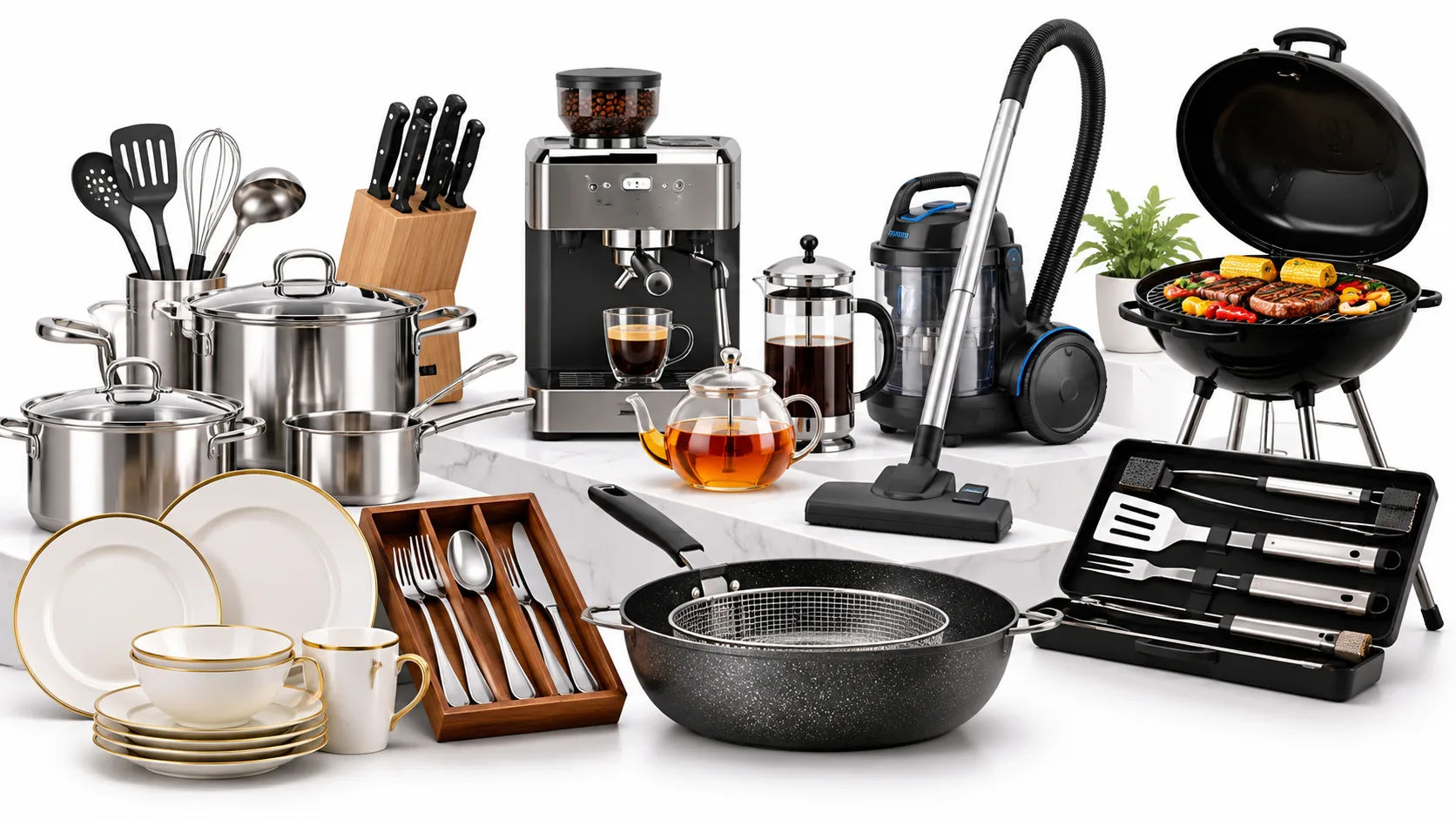
Buying a product simply because it looks attractive or has a low price is not always a good decision. You need to consider its performance, quality, energy consumption, safety, maintenance requirements, and expected lifespan. Making an informed decision can help you avoid unnecessary expenses and enjoy better performance for years.
When shopping for electrical appliances, it is important to understand your household requirements before comparing different products. A suitable choice should match your daily routine, available space, electricity supply, and budget. Whether you are furnishing a new home or replacing an older product, understanding the important buying factors will help you make a practical investment.
This comprehensive guide explains how to select suitable household products, compare available options, understand important specifications, and avoid common purchasing mistakes. With the right approach, you can choose products that offer convenience, reliability, safety, and long-term value.
Your Household Requirements
The first step in choosing any household product is identifying what you actually need. Every home has different requirements depending on its size, number of residents, lifestyle, and daily activities.
For example, a large family may need a refrigerator with greater storage capacity, while a single person or small household may be comfortable with a compact model.
Before visiting a store or browsing online, consider how frequently you will use the product and what features are essential for your routine.
Consider Your Family Size
The number of people living in your home can influence the type and capacity of products you need.
A family with several members may benefit from a large washing machine, spacious refrigerator, and powerful cooking equipment. Smaller households usually require products with lower capacities.
Choosing the correct size helps prevent unnecessary electricity consumption and makes daily tasks more convenient.
Think About Your Daily Routine
Your lifestyle also influences purchasing decisions.
If you regularly prepare meals at home, a reliable microwave, oven, or food processor may be useful. If your schedule is busy, automatic washing machines and programmable cooking products can save valuable time.
Consider which activities take the most effort in your household. Prioritise products that solve everyday problems instead of paying extra for features you rarely use.
2. Set a Realistic Budget
Budget planning is another important part of purchasing household products. Prices can vary significantly depending on the brand, technology, design, capacity, and additional features.
Before making a purchase, decide how much you can comfortably spend.
However, choosing the cheapest option is not always the best way to save money. An inexpensive product may have poor construction, limited functionality, or higher electricity consumption.
Similarly, the most expensive model does not automatically offer the best value.
Compare Initial and Long-Term Costs
The purchase price is only one part of the total cost.
You should also consider:
-
Electricity consumption during regular use.
-
Water consumption for washing machines and dishwashers.
-
Installation and delivery charges.
-
Replacement parts and maintenance expenses.
-
Repair costs after the warranty expires.
For example, an energy-efficient refrigerator may cost more initially but reduce monthly electricity expenses.
Looking at long-term costs helps you understand the actual value of your investment.
Avoid Unnecessary Features
Modern products often include advanced settings, digital displays, smart connectivity, and automated functions.
Although these features can be useful, not everyone needs them.
Choose functions that genuinely improve your daily experience. Avoid paying extra for complicated features that you are unlikely to use.
3. Check Energy Efficiency
Energy efficiency should be one of your main considerations when selecting household equipment. Products that consume less electricity can help reduce utility bills and minimise unnecessary energy use.
This is particularly important in homes where refrigerators, air conditioners, washing machines, and other equipment operate frequently.
Understand Energy Labels
Energy labels provide useful information about a product's electricity consumption and efficiency rating.
Depending on the product and the country, labels may include:
-
Energy efficiency ratings.
-
Estimated annual electricity consumption.
-
Capacity information.
-
Operating performance.
-
Water consumption, where applicable.
Compare the available information between similar models rather than judging efficiency by appearance or marketing claims.
Consider Inverter Technology
Inverter technology is commonly available in air conditioners, refrigerators, and some washing machines.
It allows motors or compressors to adjust their operating speed according to the required workload.
Instead of repeatedly operating at full capacity and switching off, an inverter system can regulate performance more smoothly.
This may improve energy efficiency, reduce noise, and provide more consistent operation.
However, actual savings depend on the product, usage habits, installation, and operating conditions.
4. Choose the Right Size and Capacity
Size and capacity directly influence how conveniently a product fits into your home and meets your requirements.
A product that is too small may struggle to handle your household needs. An unnecessarily large model can occupy valuable space and consume more resources.
Measure Available Space
Before purchasing large household equipment, measure the intended installation area.
Check the following:
-
Width and height of the available space.
-
Depth of the installation area.
-
Door-opening clearance.
-
Distance from nearby walls.
-
Ventilation requirements.
-
Access through hallways and doorways.
For refrigerators and washing machines, proper clearance is especially important because restricted ventilation or incorrect installation may affect performance.
Match Capacity to Usage
Different products have different capacity requirements.
For example, washing machines are commonly measured by their load capacity in kilograms. Refrigerators are generally measured in litres.
Consider how much laundry your household produces and how much food you normally store.
Choosing appropriate capacity makes daily use more convenient and can prevent unnecessary operating costs.
5. Research Brand Reputation
Brand reputation can provide useful information about product quality, customer service, reliability, and after-sales support.
However, you should not choose a product based entirely on its brand name.
Even well-known manufacturers offer different product ranges, and the quality of individual models can vary.
Compare Established Manufacturers
Look for companies with a history of producing reliable household equipment.
Research their product specifications, warranty conditions, service availability, and replacement-part support.
A reputable manufacturer should provide clear information about its products and offer reasonable customer assistance.
Read Customer Reviews
Customer reviews can help you understand how a product performs in everyday situations.
Pay attention to repeated comments about:
-
Product durability.
-
Noise levels.
-
Electricity consumption.
-
Ease of operation.
-
Repair frequency.
-
Customer service quality.
Do not rely on one extremely positive or negative review. Instead, examine several reviews to identify common experiences.
6. Examine Product Features and Specifications
Specifications explain how a product operates and what it can do.
Understanding these details makes it easier to compare different models and identify which one meets your requirements.
Focus on Practical Features
Look for features that improve performance, convenience, and usability.
For example, a washing machine may offer different wash programmes, adjustable temperatures, and automatic load detection.
A refrigerator may include adjustable shelves, temperature controls, and separate compartments for different food items.
An air conditioner may provide sleep mode, adjustable fan speeds, timers, and humidity control.
Compare these features according to your actual needs.
Check Ease of Operation
A product should be easy to understand and operate.
Complicated controls can make everyday activities frustrating, particularly for people who prefer simple settings.
Look for clearly labelled buttons, readable displays, convenient controls, and accessible maintenance components.
A straightforward design can make long-term ownership more enjoyable.
7. Prioritise Safety Standards
Safety should never be overlooked when purchasing household electrical equipment.
Poor-quality wiring, inadequate insulation, damaged plugs, and unreliable components can create electrical hazards.
Always choose products that meet applicable safety requirements.
Check Electrical Compatibility
Make sure the product is compatible with your household electricity supply.
In Pakistan, standard household electricity is generally supplied at approximately 230 volts and 50 Hz, but you should always check the manufacturer's specifications and local installation requirements.
Pay attention to:
-
Rated voltage.
-
Operating frequency.
-
Plug type.
-
Power consumption.
-
Earthing requirements.
-
Recommended circuit protection.
Never assume that every imported product is automatically compatible with your electrical system.
Look for Safety Features
Depending on the product, useful safety features may include:
-
Overheating protection.
-
Automatic shut-off.
-
Child locks.
-
Leakage protection.
-
Overload protection.
-
Insulated electrical components.
For products that require specialised installation, use a qualified technician.
Avoid connecting high-power equipment through unsuitable extension cords or overloaded sockets.
8. Consider Maintenance and Cleaning Requirements
Maintenance is an important factor because even high-quality products require regular care.
Before purchasing, understand how much maintenance the product needs and whether its components are easy to clean.
Check Cleaning Requirements
Different products require different cleaning routines.
Refrigerators need regular cleaning of shelves, compartments, and door seals. Washing machines may require drum cleaning and filter maintenance.
Air conditioners need clean filters to maintain proper airflow, while ovens and microwaves require regular removal of food residue.
Choose designs that provide convenient access to removable components and cleaning areas.
Check Replacement Parts
Some products require replacement filters, belts, hoses, batteries, or other components.
Before purchasing, confirm that these parts are available in your area.
Also consider whether authorised service centres operate nearby.
Easy access to spare parts can reduce repair delays and help extend product lifespan.
9. Evaluate Warranty and After-Sales Support
A warranty provides protection against certain manufacturing defects and product failures during a specified period.
However, warranty coverage differs between manufacturers and product categories.
Read the warranty document carefully before completing your purchase.
Understand Warranty Conditions
Check the following details:
-
Warranty duration.
-
Covered components.
-
Labour coverage.
-
Exclusions and limitations.
-
Conditions for free repairs.
-
Requirements for proof of purchase.
Some manufacturers offer separate warranty periods for compressors, motors, and electronic components.
Understanding these differences helps prevent confusion if a problem develops.
Check Customer Service Availability
Good after-sales support can make ownership much easier.
Find out whether the manufacturer offers authorised repair centres, technical assistance, and genuine replacement parts.
If you are buying from a local retailer, ask how warranty claims are handled.
A reliable service network is particularly important for expensive products that may require professional repairs.
10. Compare Different Types of Electrical Appliances
electrical appliances products serve different purposes, so their buying requirements are not always the same.
Understanding the important features of each category helps you make more suitable choices.
Refrigerators
When choosing a refrigerator, consider storage capacity, energy efficiency, cooling performance, and available space.
Look for adjustable shelves, suitable freezer capacity, effective temperature controls, and easily accessible cleaning components.
Also check the door configuration and whether the design fits your kitchen layout.
Washing Machines
For washing machines, compare load capacity, water consumption, spin speed, wash programmes, and energy efficiency.
Front-loading models may offer different efficiency and washing characteristics from top-loading models.
Choose a machine according to your laundry volume, available installation space, and preferred operating style.
Air Conditioners
Air conditioners should be selected according to room size, insulation, sunlight exposure, ceiling height, and cooling requirements.
Check the cooling capacity, energy rating, noise level, and inverter technology.
An incorrectly sized unit may struggle to maintain comfortable temperatures or consume unnecessary electricity.
Microwaves and Ovens
Vacuum cleaners are available in different designs, including upright, canister, handheld, and cordless models.
Consider suction performance, filtration, dustbin capacity, battery life, weight, and available attachments.
If you have pets or carpets, pay particular attention to brush design and filtration performance.
11. Consider Smart Technology and Modern Features
Technology has changed how many household products operate.
Some modern models include Wi-Fi connectivity, smartphone applications, automated settings, and remote monitoring.
These features can provide additional convenience, especially for people with busy schedules.
Explore Smart Connectivity
Smart refrigerators may provide temperature monitoring, while connected air conditioners can allow users to adjust settings through mobile applications.
Some washing machines also support remote controls and programme notifications.
Before choosing a connected product, check whether its application is compatible with your smartphone and whether the manufacturer provides ongoing software support.
Understand Privacy and Security
Connected household equipment may collect operational information and communicate through internet services.
Read the manufacturer's privacy policy and understand what information the product collects.
Use strong passwords, secure your home Wi-Fi network, and install available software updates.
Smart features should improve convenience without creating unnecessary privacy concerns.
12. Inspect Products Before Purchasing
Whether you shop online or visit a physical store, take time to inspect the product before completing your purchase.
If possible, examine the model in person to understand its construction, controls, dimensions, and overall appearance.
Check Physical Quality
Look for strong materials, secure handles, properly fitted doors, and well-finished surfaces.
Buttons and control panels should feel stable and operate correctly.
Check that removable components fit properly and that there are no visible cracks, dents, or scratches.
For online purchases, examine product photographs, seller information, return policies, and customer feedback.
Verify the Model Number
Always confirm the exact model number before paying.
Different versions of the same product may have different capacities, features, energy ratings, and warranty conditions.
Make sure the model delivered matches the specifications advertised by the seller.
13. Avoid Common Buying Mistakes
Even experienced shoppers can make poor purchasing decisions when they rush or overlook important details.
Avoiding common mistakes can protect your budget and help you choose more reliable products.
Buying Without Research
Purchasing the first product you see can lead to disappointment.
Compare several models and understand their specifications before making a decision.
A little research can help you identify better features, more suitable capacities, and stronger warranty coverage.
Ignoring Electricity Consumption
A product with a low purchase price may become expensive if it consumes excessive electricity.
Always compare energy labels and estimated operating costs.
This is especially important for equipment that runs for several hours every day.
Choosing Appearance Over Performance
Modern designs can make products look attractive, but appearance should not be your main selection criterion.
Focus on reliability, safety, functionality, and ease of maintenance.
A simple product that performs consistently may offer better value than an expensive model with unnecessary decorative features.
Ignoring Installation Requirements
Some products require professional installation, ventilation, suitable wiring, or special mounting arrangements.
Understand these requirements before purchasing.
Planning installation in advance can prevent additional expenses and avoid operational problems.
14. Think About Environmental Impact
Responsible purchasing involves considering how products affect the environment.
Energy-efficient models can reduce electricity consumption, while durable products may generate less waste because they do not need frequent replacement.
Choose Durable Products
A longer-lasting product can reduce the need for repeated purchases.
Check construction quality, repairability, spare-part availability, and warranty support.
Proper maintenance also helps extend the useful life of household equipment.
Dispose of Old Products Responsibly
Old electrical equipment should not automatically be thrown into ordinary household waste.
Electronic products may contain materials that require specialised recycling or disposal.
Look for suitable electronic waste collection services in your area.
Responsible disposal helps reduce environmental pollution and supports better resource management.
Conclusion
Choosing suitable household equipment requires careful consideration of several important factors. Instead of focusing only on price, appearance, or brand reputation, buyers should evaluate performance, energy efficiency, safety, capacity, durability, maintenance, and warranty coverage.
The best purchasing decisions begin with understanding household requirements. Consider your family size, daily routine, available space, and expected usage before comparing different models. These details help you identify products that offer practical benefits without unnecessary expenses.
Budget planning is equally important. Compare the initial purchase price with long-term operating costs, including electricity consumption, maintenance, installation, and replacement parts. An energy-efficient product may require a higher initial investment but can provide better value over time.
You should also research manufacturers, read customer reviews, examine product specifications, and check the availability of authorised repair services. These steps can help you avoid unreliable products and make ownership more convenient.
Safety deserves particular attention, especially when purchasing high-powered equipment. Always check electrical compatibility, safety certifications, wiring requirements, and installation instructions. Professional assistance should be used whenever a product requires specialised electrical work.
Modern technology can provide additional convenience through smart controls, automatic settings, and energy-management features. However, these functions should support your actual needs rather than increase the purchase price unnecessarily.
Ultimately, selecting the right electrical appliances is about finding a balance between quality, affordability, performance, and long-term reliability. A thoughtful purchasing decision can improve household comfort, simplify everyday responsibilities, reduce energy expenses, and provide dependable service for many years.
Take your time, compare available options, and prioritise practical features over marketing promises. By following these guidelines, you can confidently invest in household products that suit your lifestyle and contribute to a more efficient, comfortable, and well-organised home.
Related Post
Top 10 Planetary Medical Device Companies To View In 2026
Top 10 Global Medical Device Companies to Watch in 2026Closebol replica watches.dThe medical exam device…
Why Girls Forge Dresses Online Pakistan Trending?
The forge industry in Pakistan has toughened a Major shift in Holocene eld, especially with…
Unlocking Stylish Transformations at Pittsburgh Hair Salons
Understanding the Role of a Hair Salon in Personal Style A hair salon is much…