

How do online games for touch screen work?
Ibomma News Pro >> Gaming>> How do online games for touch screen work?How do online games for touch screen work?
Touchscreen technology has changed the way people interact with digital entertainment. Instead of using a keyboard, mouse, or traditional controller, players can control games by tapping, swiping, dragging, and pressing different areas of a screen. Smartphones, tablets, and touchscreen laptops make gaming more accessible because players can interact directly with the objects they see. Understanding how online games for touch screens work helps explain the technology, software, and communication systems that make these experiences possible.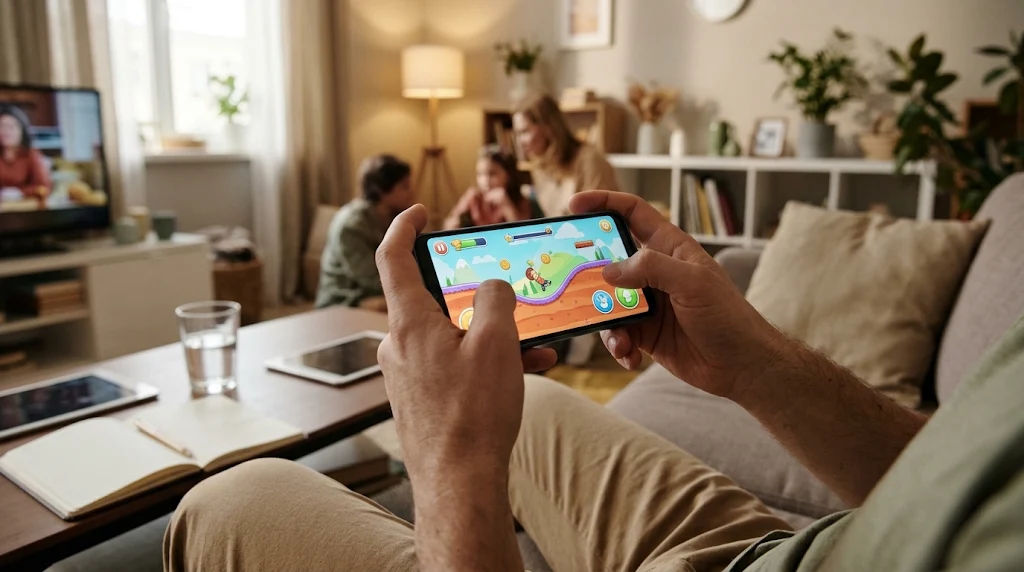
Touchscreen gaming combines hardware, software, internet connectivity, and user interaction. When someone touches a character, moves an object, or selects an option, the device detects that action and sends information to the game. The software processes the input and updates the display almost immediately. In multiplayer experiences, the device may also exchange information with remote servers so that other players can see the results.
This guide explores how touchscreen gaming works, the technology behind touch detection, the role of internet connections, game development, graphics, security, and the features that create an enjoyable experience. It also explains common technical problems and how developers improve performance across different devices.
Touchscreen Gaming Technology
Touchscreen gaming allows players to interact with digital content through physical contact with a display. The screen acts as both an input device and a visual output system.
Traditional computer games usually depend on external equipment, OPEN88 , mice, and controllers. Touchscreen experiences combine many of these controls directly into the display.
For example, a player might tap a button to jump, swipe to move a character, or drag an object to another location. The game interprets these movements and responds according to its programming.
What Makes a Touchscreen Interactive?
A touchscreen contains technology that detects contact or movement across its surface. Modern smartphones and tablets commonly use capacitive touchscreen technology.
Capacitive screens detect changes in the electrical properties of the display when a finger touches it. The device identifies the location of the contact and sends that information to its operating system.
The game then receives the input and determines what action should happen.
For example, touching a virtual button may cause a character to move forward. Touching another area might open a settings menu or activate a special ability.
Different Types of Touchscreen Technology
Several technologies can support touchscreen interaction.
Capacitive touchscreens: These are widely used in modern smartphones and tablets. They respond to the electrical properties of a finger and generally support smooth multitouch interaction.
Resistive touchscreens: These detect pressure between two conductive layers. They can respond to different objects, including a stylus, but are less common in modern consumer smartphones.
Infrared touchscreens: These use infrared light beams to identify interruptions caused by contact with the display area.
Capacitive technology is particularly suitable for modern mobile gaming because it supports quick responses and multiple simultaneous touch points.
How Touch Inputs Become Game Actions
The most important part of touchscreen gaming is the process that transforms physical contact into digital instructions.
Although this process happens very quickly, several technical stages take place behind the scenes.
Step 1: Detecting the Touch
When a player touches the display, the touchscreen sensor detects the contact location.
The sensor identifies the approximate position of the finger and creates input data for the operating system.
For example, if someone touches the lower-right corner of the screen, the device records the coordinates of that location.
Step 2: Processing the Input
The operating system receives the touch information and sends it to the active application.
The game software checks which interactive element is located at those coordinates.
If the position matches a virtual button, the game recognizes the intended action.
If the player touches an area containing a movable object, the software may begin a dragging operation instead.
Step 3: Updating the Game
After identifying the action, the game engine processes the instruction.
It may move a character, change a score, activate an animation, or update another part of the game environment.
The updated information is then prepared for display.
Step 4: Displaying the Response
The screen refreshes to show the result of the player's action.
A responsive game completes this process quickly enough to make the interaction feel natural.
The quality of the experience depends on touchscreen accuracy, processing power, software efficiency, and display performance.
The Role of Game Engines
Game engines provide the software foundation for many touchscreen experiences. They help developers create environments, manage controls, display graphics, and process game rules.
Without a game engine or similar development framework, creating complex interactive experiences would require significantly more programming work.
How Game Engines Process Touch Inputs
A game engine receives input information and connects it to specific actions.
Developers create rules that explain what should happen when a player taps, swipes, or holds a particular area.
For example, a simple racing game might use the following controls:
-
Tapping a button accelerates the vehicle.
-
Pressing another button activates the brakes.
-
Swiping left changes direction.
-
Holding a control maintains an action.
The engine processes these instructions and updates the game environment.
Graphics and Animation
Game engines also manage visual elements.
They control character movement, background scenes, lighting, object positions, and animation sequences.
When a player moves an object, the engine calculates its new position and displays the updated result.
Some games use two-dimensional graphics, while others create detailed three-dimensional environments.
The engine must manage these elements efficiently to maintain smooth performance.
How Internet Connectivity Supports Online Gaming
Not every touchscreen game requires an internet connection. Some games operate entirely on a smartphone or tablet.
However, multiplayer experiences and games with online features depend on communication between devices and remote servers.
Internet connectivity allows players to compete, cooperate, share information, and access online content.
Understanding Game Servers
A game server is a computer system that manages information for connected players.
Depending on the game, it may handle player accounts, multiplayer sessions, scores, game progress, and shared environments.
When someone performs an action in a multiplayer game, the device may send information to the server.
The server processes the information and distributes relevant updates to other connected players.
This process helps maintain a shared gaming environment.
How Multiplayer Communication Works
Consider a multiplayer racing experience.
One player moves a vehicle forward using touchscreen controls. The device sends information about that movement to the game server.
The server processes the update and communicates the relevant information to other players.
Their devices then display the updated position of the vehicle.
This exchange happens repeatedly during gameplay.
Efficient communication is important because delays can make multiplayer experiences feel unresponsive.
Why Internet Speed Matters
Internet performance affects how smoothly connected games operate.
Several factors influence the experience:
Latency: Latency measures the time required for information to travel between a device and a server. Lower latency generally produces more responsive multiplayer interactions.
Bandwidth: Bandwidth determines how much information an internet connection can transfer over a particular period.
Connection stability: A stable connection reduces interruptions and unexpected disconnections.
Network congestion: Too many devices using the same connection can affect performance.
A fast and stable internet connection can improve the experience, although server performance and game design also matter.
Common Touchscreen Controls Used in Games
Touchscreen controls replace many traditional physical gaming buttons with interactive areas on the display.
Developers choose control methods according to the type of game and the actions players need to perform.
Tap Controls
Tapping is one of the simplest interaction methods.
A player touches a particular area once to activate an action. This method is common in puzzle experiences, quizzes, card games, and menu-based entertainment.
Tap controls are easy to understand because they closely resemble ordinary smartphone interactions.
Swipe Controls
Swiping involves moving a finger across the screen.
Games use this interaction for movement, changing directions, selecting objects, and navigating menus.
For example, a puzzle game might require a player to swipe a tile toward an empty space.
Drag-and-Drop Controls
Dragging allows players to move objects from one screen location to another.
This method is particularly useful in building games, drawing applications, inventory systems, and strategy experiences.
The game tracks the finger's movement and updates the position of the selected object.
Multitouch Controls
Multitouch technology allows a touchscreen to recognize multiple contact points simultaneously.
Players can use two fingers to zoom, rotate objects, or perform more complicated actions.
Some games also use multitouch controls to combine movement and additional abilities.
Why User Interface Design Is Important
The user interface, commonly called the UI, includes the buttons, menus, indicators, icons, and other visual elements that help players interact with a game.
A well-designed interface makes controls understandable and easy to access.
Poor interface design can create confusion, even when the game itself has excellent graphics and programming.
Button Placement and Screen Layout
Developers carefully choose where to place virtual controls.
Important buttons should be easy to reach without covering essential game information.
For example, a mobile action game may place movement controls on one side and additional action buttons on the other.
The layout should also account for different screen sizes.
Responsive Interface Design
Smartphones and tablets have different display dimensions.
A game designed only for one screen size may become difficult to use on another device.
Responsive design adjusts interface elements according to the available display area.
This can include resizing buttons, changing menu positions, and adjusting text.
Visual Feedback
Visual feedback helps players understand whether their actions have been recognized.
A button might change appearance when touched. An object might move when dragged, while a progress indicator may update after a completed task.
These small details make touchscreen interaction more understandable.
The Importance of Device Hardware
Touchscreen gaming depends on more than the display. Several hardware components work together to process actions and produce visual results.
Processor Performance
The central processing unit, or CPU, handles many general computing tasks.
It processes game instructions, manages application operations, and supports communication between different software components.
A capable processor can help a device handle more complicated gaming tasks.
Graphics Processing Unit
The graphics processing unit, or GPU, handles visual calculations.
It helps render characters, environments, lighting effects, and animations.
Games with detailed three-dimensional graphics may require more GPU resources than simple puzzle experiences.
RAM and Storage
Random access memory, commonly called RAM, temporarily stores information that applications need while running.
Insufficient available memory can affect performance, particularly when several applications are active.
Storage is used for game files, graphics, updates, and saved information.
Keeping enough storage space available can help devices manage applications and updates more effectively.
Battery and Temperature Management
Gaming can place additional demands on a device's processor and graphics hardware.
This may increase battery consumption and generate heat.
Developers often optimize games to reduce unnecessary processing.
Operating systems also use power-management features to control performance and temperature.
How Developers Create Touchscreen Games
Creating a touchscreen game involves planning, programming, design, testing, and ongoing improvements.
Developers must consider both the entertainment experience and the technical requirements of different devices.
Planning the Game Concept
The development process usually begins with an idea.
Developers decide what type of experience they want to create, who the intended audience is, and what players should accomplish.
They also determine the basic rules, controls, challenges, and progression system.
A clear plan helps guide the remaining development work.
Designing the User Interface
Designers create layouts for menus, buttons, indicators, and other interactive elements.
They consider screen size, readability, accessibility, and finger movement.
The goal is to make the interface comfortable and easy to understand.
Programming the Game
Programmers use development tools and programming languages to create the game's functionality.
They build systems for touch detection, character movement, scoring, animations, and other interactions.
For multiplayer features, developers may also create systems for server communication and account management.
Testing and Optimization
Testing helps identify problems before a game becomes widely available.
Developers check whether controls respond correctly, graphics display properly, and online features work reliably.
They may also test the game on different smartphones and tablets.
Optimization improves performance by reducing unnecessary resource usage and correcting software problems.
Popular Categories of Touchscreen Gaming
Touchscreen technology supports many different types of entertainment.
Each category uses controls that match its gameplay requirements.
Puzzle and Brain Games
Puzzle games often use tapping, dragging, and swiping.
Players may arrange objects, solve patterns, complete challenges, or identify relationships between different elements.
These experiences usually benefit from simple controls and clear visual feedback.
Strategy Games
Strategy games allow players to make decisions, manage resources, and plan actions.
Touch controls are useful for selecting units, opening menus, and moving objects around a map.
Some strategy experiences also include multiplayer features.
Racing and Sports Games
Racing games often use virtual steering controls, buttons, and motion sensors.
Sports games may use taps and swipes to control passing, movement, or other actions.
The control system must respond accurately because timing can influence the result.
Educational Games
Educational games combine interactive activities with learning objectives.
They may include quizzes, vocabulary exercises, mathematical challenges, and problem-solving activities.
Touchscreen controls make these experiences accessible to users who prefer direct interaction.
Common Problems in Touchscreen Gaming
Although modern devices provide advanced touchscreen technology, players may occasionally experience technical difficulties.
Understanding these problems can help users identify possible solutions.
Delayed Touch Response
A delay between touching the display and seeing a reaction can make a game difficult to control.
Possible causes include high system workload, inefficient software, low frame rates, or device performance limitations.
Closing unnecessary applications and installing available updates may help improve responsiveness.
Accidental Touches
Accidental touches can happen when controls are positioned too close to important game elements.
Developers can reduce this problem by improving button spacing and introducing suitable touch-recognition areas.
Players can also check whether their device screen is clean and functioning correctly.
Connection Problems
Multiplayer experiences may disconnect when internet access becomes unstable.
Weak Wi-Fi signals, network congestion, and server problems can contribute to interruptions.
Checking the connection and restarting the game may help resolve temporary issues.
Performance and Graphics Problems
Some games may run slowly on devices with limited hardware resources.
Reducing graphics settings, closing background applications, and keeping the operating system updated may improve performance.
Not every device can support demanding games at the same quality level.
Security and Privacy in Online Gaming
Internet-connected games may collect certain information to provide accounts, multiplayer services, progress synchronization, and other features.
Players should understand how their information is handled.
Protecting Player Accounts
Account security helps prevent unauthorized access.
Players should use strong, unique passwords and enable additional security features when available.
They should also avoid sharing login details with other people.
Understanding Game Permissions
Some games request access to device features such as storage, notifications, or other services.
Players should review permissions and consider whether each request is necessary for the game's functionality.
Safe Online Communication
Multiplayer experiences may include messaging, voice communication, and interactions with unfamiliar players.
Using privacy settings and avoiding the sharing of personal information can help create a safer experience.
Parents and guardians can also review age ratings and available safety controls when selecting games for younger users.
Future Developments in Touchscreen Gaming
Touchscreen technology continues to develop as smartphones and tablets become more powerful.
Future improvements may make gaming more responsive, accessible, and visually advanced.
Better Touch Recognition
Newer display technologies may improve touch accuracy and reduce unwanted input.
More responsive sensors can help developers create controls that feel natural.
Artificial Intelligence
Artificial intelligence can support different parts of game development.
For example, developers can use AI-based systems to create more adaptable opponents, improve testing, and personalize certain gameplay experiences.
These systems may also help games respond more effectively to player behavior.
Cloud Gaming
Cloud gaming allows supported games to run on remote computing systems rather than relying entirely on local device hardware.
The device receives streamed visual information while sending player inputs through the internet.
This approach can make some demanding experiences available on devices that cannot run them locally.
However, cloud gaming depends heavily on reliable internet connectivity and suitable server infrastructure.
Improved Accessibility
Future games may provide more flexible control layouts, adjustable interface sizes, and additional accessibility settings.
These features can make touchscreen experiences easier to use for people with different interaction needs.
Tips for Enjoying a Better Touchscreen Gaming Experience
Players can take several practical steps to improve their gaming experience.
-
Keep the device updated: Software updates can improve compatibility, stability, and security.
-
Maintain sufficient storage: Free storage space helps the device manage applications and updates.
-
Use a stable connection: Reliable internet access is important for multiplayer experiences.
-
Adjust game settings: Choose graphics and control settings that work well with the device.
-
Check screen cleanliness: A clean display can support accurate touch recognition.
-
Take regular breaks: Spending long periods looking at a screen can cause discomfort and fatigue.
-
Review privacy settings: Understand account permissions and available communication controls.
These simple habits can help players enjoy smoother and more comfortable gaming sessions.
Conclusion
Touchscreen gaming combines several technologies to create interactive digital experiences. The touchscreen detects physical contact, the operating system processes input information, and the game software translates those actions into movement, animations, and other results. In connected multiplayer experiences, internet communication and remote servers allow players to share information and participate in the same virtual environment.
Understanding how online games work on touchscreens also reveals the importance of hardware, software development, interface design, and network performance. Every tap, swipe, or drag involves a series of processes that must work together to produce a responsive experience.
Game engines manage interactions and graphics, while processors and graphics units handle demanding calculations. Internet connections support multiplayer communication, and security systems help protect player accounts and information.
As touchscreen technology advances, developers will have more opportunities to create accessible and engaging experiences. Better displays, improved hardware, artificial intelligence, cloud technology, and flexible controls will continue to influence the future of mobile entertainment.
Ultimately, touchscreen gaming works because different technologies communicate efficiently. By combining direct interaction with intelligent software and reliable hardware, modern devices turn simple finger movements into complex digital experiences.
Related Post
How Increased The World Is Surrounding Online Casino Games
On the web play has come a long way since their origin in the mid-1990s.…
Komparasi Online Casino: Mana Yang Paling Menguntungkan?
Dalam era digital saat ini, online casino merupakan salah satu pilihan dalam ranah hiburan dan…
Just How To Exact The Best On The Web Gambling Bonuses
Quality customer care is essential in the web play manufacture. Participants oftentimes want steering with…